Saturday, November 6, 2010

Griffin's Blog: Griffin's Third Grade Folk Tales Play


November 1, 2010

Griffin's Blog:

I am a traveler in a goat scene of the Nasaretten folk tale story set in Turkey we did for our 3rd grade play. Nasaretten is the main character. First he helps a grandma carry her vegetables home. Then, he helps a boy find his way home. Then, this is where I come in. It's the goat scene. Nasaretten helps a cook catch a goat that has gone loose. The main part of the story is at the end.

Nasaretten goes to his friend's house for a banquet. His coat is shabby and dirty and smelling of goat. When he comes to his friend's house, his friend opens the door and his friend is shocked. He thinks his other guests will laugh at him for being friends with such a shabby smelly man. They all decide to ignore him and maybe he'll go away. Nasaretten goes home because he was ignored. On his way home, he had an idea.

When he got home, he jumped into a tub of hot water, poured a whole bottle of crystal shampoo on him, and started to scrub himself until he glistened. Then, he put on a magnificent new coat and went back to the banquet. He got food and was not ignored. But, instead of eating the food, he shoved the food into his coat shouting: "Eat coat, eat!"

His friends said "Why are you eating your coat?" It seemed you liked my new, cleaner coat more than me, so I'm feeding my coat. "Many a good man you shall find under a shabby, smelly coat."

The moral of the story is that whoever has kindness in his or her heart is always well-dressed.

The end!

Friday, November 5, 2010

Under the radar: Refugees in Malaysia

October 27, 2010

Half of my Fulbright is child mental health prevention research in Malaysia. I’ve met with many different non-governmental organizations (NGO’s) here and am now in the planning stage of collaborating with Harvest Centre, the organization that I blogged about previously – that held a soccer tournament for the refugee kids at their school. This blog is me giving you all my current knowledge about refugees here. I’m doing a separate blog entry for the more hopeful side of my research, the mental health work with the refugee kids.

But, I should warn you about this blog entry – it’s heartbreaking -- the worst stories of some of these refugees. It’s been an awakening for me here, opening my eyes away from my elite expat and academic world. I got most of this information from a minority Malaysian reporter who used to be at a major US magazine. There is no substantial written information anywhere about these refugees – they are completely invisible here. The government wants to keep it that way. Nothing is allowed to be written about them in the newspapers. And, no one’s written about them in academic journals. So, I have no hard, written information to start my research on them. It’s all word of mouth. But, this reporter was the best word of mouth I could get. This hardened, cynical reporter cried while telling me some of the refugees’ stories. I was shocked while hearing her talk, and just seeing how their stories affected her.

Refugee kids here are not your typical refugees. They don’t live in tents in refugee compounds. They usually have adequate food, since food is outrageously cheap here. They are largely from Burma (Rohingya Muslim Burmese) and about 15% are from Afghanistan. There are over 100,000 known refugees here so you can imagine how many refugees there really are here – way more than 100,000. They often live 50 people in an apartment, hidden away from view. But, most of the refugees hide in the jungle on the outskirts of Kuala Lumpur. They live under tarps and pool their money for food.

The head of United Nations High Commission on Refugees in Malaysia (UNHCR) told me that there’s a new kind of refugee – Refugees following the New Capitalism. In Asia, for instance, there’s huge, developing capitalist markets. In Kuala Lumpur, there are high rises being built 24/7. It seems like there is no worldwide recession here. It’s booming! And, the people who help build those high rises are usually refugees or illegal immigrants from Indonesia. Some of them sleep and eat in the buildings they are building. Women begging in the streets are refugees. People working in the back of restaurants are refugees. Men working the vast palm plantations here are refugees, often locked at night into little cells, left to sleep and defecate in their cell, on the floor. But, because they are not refugees living in glaring tents, UNHCR is not given as much money here as other places, given the huge number of refugees.

You can see Malaysia relies on these refugees but Malaysia refuses to be a signatory to the 1951 UN treaty for protection of refugees. So, they provide no schooling, health care, really anything for these refugees. But, it gets worse. The government has called RELA, a quasi-governmental group of citizens with guns. Imagine the US citizen groups patrolling the Mexican border, but, yes, worse. RELA raids are famous and there’s even an NGO who specializes in “RELA raid debriefings” to help with the post-traumatic syndrome afterwards. RELA swoops in and brings the refugees to detention centers. There, if they are lucky, they can bribe their way out. Sometimes they remember to keep $25 on them (a lot of money for these refugees). They call it RELA money. Then they can bribe and get out.

But, if they don’t have the bribe or there’s no one to bribe, they are often kept in the detention center and only fed rice and dried fish once a day in awful conditions. That’s for the lucky ones. The unlucky refugees are sold by the quasi-governmental RELA soldiers to middle men who then sell them into a vast human trafficking network. The refugees are usually sold into forced slavery, working on fishing boats off the coast of Thailand.

The refugee women and children are also vulnerable. Often, the refugee mothers feel they can’t afford to keep their babies, so some sell their babies into what they think is adoption. But, really, the babies are sold into a baby trafficking network. These babies are sold for high prices for adoption, but often they are returned to the trafficker, if there’s even a small flaw in the baby. These returned babies and those who couldn’t be sold into adoption are then locked in a run-down home for over 6 years, until they are sold into prostitution at the age of 6. The reporter handed me a video she took interviewing an actual baby trafficker and of a trafficked baby. It’s been sitting on my desk untouched. I keep on waiting until I’ll feel brave enough to watch it. In fact, I feel bad for not having watched it because the reporter’s so frustrated with feeling like there’s not enough media interest out there on the very real problem of baby trafficking here.

Then, these women and children refugees are very vulnerable here. Many tell of Muslim Malaysian men threatening the girls that they will rape them. One walks home from school and has the same men tell her every day that they will rape her. When she gets home, she and the women in the house push all the furniture against the door since men have been known to force their way in when the fathers of the house are gone. There’s even been an NGO created just to prevent sexual abuse of refugee children. They go from refugee school to school holding up pictures and demonstrating what’s appropriate and inappropriate touch. I’ve been told there’s no word for vagina in Burmese, which leaves the prevention workers flummoxed at times.

There are about 10,000 Burmese and Afghan refugee kids in Malaysia. They all escaped some sort of persecution back at home. Or, they were born here. Some are third generation refugee, with no hope of getting an education or a legal job in their lifetimes. Their Muslim Rohingya Burmese parents came to Malaysia thinking their Muslim Malaysian brother would take them in and protect them, especially after they were persecuted back in Burma partly due to their Muslim status. But, Malaysia was a rude awakening.

UNHCR promises to register them as official UN refugees and UNHCR has done an admirable job of registering 80,000 already. But, the reporter thinks the registration is a worthless piece of paper. Registering them will not repatriate them, necessarily, to another country. UNHCR has repatriated some, usually to the US or UK. But, the reporter firmly believes it’s a pipe dream for these Muslim Burmese refugees to ever get repatriated since they are Muslim, and Muslim refugees are not welcomed in the US or UK post-9/11. She also argues that the UN registration doesn’t protect them from RELA raids and detention. Sometimes, the refugees can call UNHCR during a RELA raid and UNHCR sometimes swoops in and has some influence, but they are largely on their own, registered as refugees or not.

There was a huge protest of refugees in front of the UNHCR headquarters here recently, and the reporter was furious as she saw the UNHCR official call the Malaysian police who beat the refugees back with sticks. Calling the police could also put them at risk for detention and worse. When she confronted UNHCR officials about calling the cops on the refugee protesters, they claimed some lame bureaucratic rule over how close protesters can get to UNHCR headquarters. And, let’s not forget that public protests, even candlelight vigil political protests like back in the US, are illegal here. You can go to jail for holding a candle in protest, much less for being a protesting refugee.

The reporter is fed up with UNHCR here. She thinks they don’t lobby enough for changes in government policy towards refugees. The government may not have signed onto the protection of refugee rights treaty but they have signed onto the Convention for the Rights of the Child. If they signed that, why can’t the government then provide schooling for the 10,000 children here? Absorbing the refugee kids into the vast governmental school system would not be that hard, she argues. Why can’t UNHCR put pressure on them? She doesn’t buy it when UNHCR tells her they are concerned they’d get kicked out of the country if they pressured the government too much.

And, she thinks the non-governmental schools for refugees are typically lame, at best. Often the schools are located in ad-hoc apartment kitchens or run-down alleyways with barely competent teachers. In some, the kids spend most of their day reading the Koran. In most, they just get a minimal education in Burmese. The parents often pressure the girls to marry by age 13 and drop out of school. And, the parents pressure the boys to drop out of school and work by age 10 or so. But, if the parents don’t get them to drop out of school, the refugee schools end at age 11. So, there is a huge number of preteen and teen refugee kids just out on the street, starting trouble at hot spots, like internet cafes. Funny, right? An internet cafĂ© being a center for problem youth behavior, but it’s a common complaint. The reporter says the government has created a hypocritical situation where it blames the refugee youth for loitering and crime while it doesn’t allow them to go to school or get jobs.

Isn’t it odd that despite such sad stories, I’m feeling hopeful? Maybe it’s because the reporter agreed to meet with me because she thought helping refugees with their mental health was really important and sadly neglected. Maybe it’s because my eyes are wide open now, and I can more clearly see where change is needed, and maybe possible.


Happy Deepavali!


November 5, 2010

Happy Deepavali!

It’s Deepavali! Before I came here, I had no idea what Deepavali was, but since EVERY HOLIDAY in the whole world is celebrated here, we celebrate Deepavali too. Actually, it makes sense to celebrate Deepavali here since 10% of Malaysia is Indian Malaysian. I guess every holiday is celebrated out of respect to all the famously diverse communities here – Muslim Malaysian, Indian Malaysian, and Chinese Malaysian. I’ve even heard they go crazy for Christmas here, even though they are not Christian. In December, during the hottest, most humid season here, there will be Christmas music blaring and fake snow and trees sold all over Kuala Lumpur.

Deepavali is an Indian holiday which is like the Indian New Year. Deepavali is about light triumphing over darkness, a good over evil idea. It’s largely used for Indian families to have reunions from all over the world. They dress in elaborately decorated, beaded, painted outfits, like gorgeous saris. They do henna designs on their skin. They stick jewels to their skin. And, they prepare a huge amount of food.

Rather than just a ritual, they use it to celebrate recent family events. An Indian Malaysian teaching assistant told me her Deepavali celebration would be to celebrate her sister’s first Deepavali as a married woman. An Indian neighbor is not allowed to do any food preparation or celebration because his mother died this past year. On his first Deepavali, after his mom’s death, it would be insulting to his mother’s memory to celebrate. So, they are going to Singapore for the weekend to celebrate, instead. They said it was an empty trip for them without seeing their family. It’s like our celebrating Christmas by ourselves (btw we won’t be! Mary and Harvey will be here!).

At the kids’ school, they celebrated Deepavali with all the kids dressing up as if they were Indians at a formal Deepavali event. If you look hard, you’ll see that Alice has a jewel attached to her forehead, and she’s wearing an elaborate set of bangles on her wrists. Ken went with a group of parents to Little India to get her costume and an Indian parent negotiated a cheap price for him, in an Indian language.

I got to wear it to work today when an Indian Malaysian professor got a few of us to sport Deepavali wear. So, if you look hard on me too, you’ll see Alice’s bangles and jewel on my forehead.

I thought I was safe this morning to wish a hearty “Happy Deepavali!” to the Indian Malaysian kids’ bus monitor, and she sheepishly answered: “No Deepavali for me, I am Christmas.”

Friday, October 29, 2010

Cancer Research Run: We dedicate it to Uncle Peter's Recovery


October 22, 2010

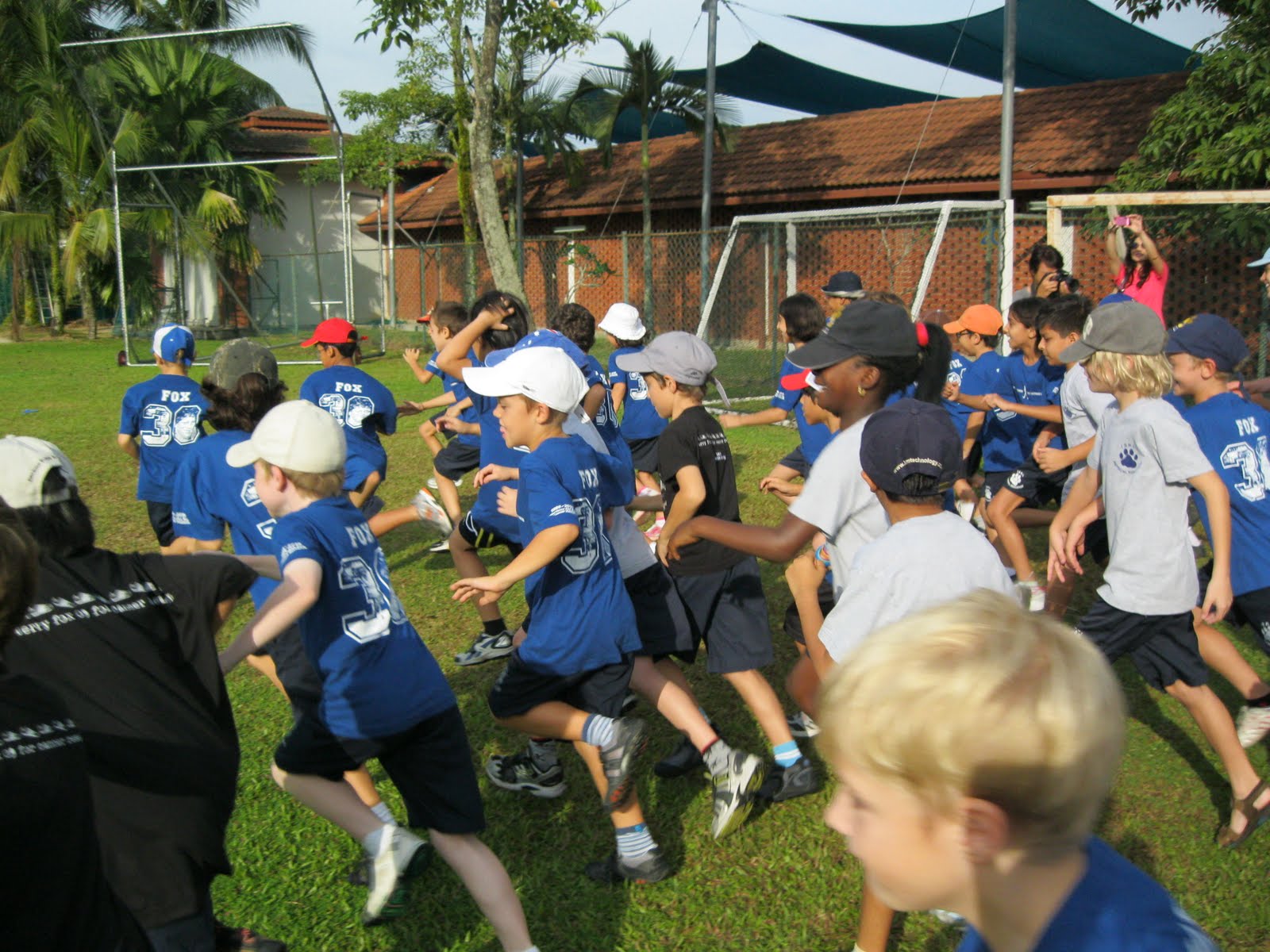
The kids' school organized a cancer research fundraiser run for all the kids and families to do on a school day. It's called the Terry Fox Run, dedicated to a cancer survivor who ran across Canada even after losing a leg to cancer. The kids' Uncle Peter is struggling with cancer now too, just having gone through a couple surgeries. We were thinking of him during his post-op recovery, and we dedicated our run to him. We hope it helps him heal.

Each time the kids ran the circuit, they would get a stripe on their arm. I ran with Griffin, then Abraham, then Alice, so I proudly sported my many stripes by the end. By the way, the stripe reward totally works! I was dying to get more stripes. In fact, I found myself pushing Griffin to get one more stripe after he was clearly exhausted from having run like a thoroughbred out of the gate, not having paced himself at all. Actually, none of the 3rd grade boys paced themselves, after all the smack talk beforehand.

Alice, on the other hand, sped ahead at a logical pace but still managed to look like a long-legged gazelle as she ran. I had to cut to keep up with her. No, I wasn't just trying to beat the 6 year olds, but I didn't buy it when they called it a "fun run" rather than the race it really was.

I joke but let me be honest...When my running group friends joined me for the first run with the 3rd grade kids, I ran fast, showing off to the parents on the sidelines. I even convinced one of my mom friends to run "tempo," meaning sprinting a bit, then running, then sprinting past the 8 year olds again. When I heard her yell to an exhausted 3rd grade runner, "Get to the left, passing on your right! Stay left when running to let the faster ones through!", I knew I was officially reaching middle age, crisis and all.

Sunday, October 24, 2010

Imbi Sunday Market: Where do chickens come from?


October 24, 2010

Abraham and I woke up before sunrise and snuck out to the early morning market in a part of Kuala Lumpur called Imbi. As we left, we promised to bring back treats for Alice and Griffin.

Imbi's famous for its chickens, and Abraham had never seen where his Dad's sauteed chicken breast actually comes from. Neither did Alice and Griffin. In the back of the market were rows of chicken cages. I was ambivalent about showing Abraham the gory process of killing a chicken, but was propelled to do it after hearing the call from Omnivore's Dilemma to know where our food comes from to be responsible, healthier eaters.

So, Boom watched from afar (not quite so bloody) as men slit the chicken's throats them dropped them into a huge, bloody bin to bleed to death. Then, they'd dump them into a tumbler that seemed to remove the feathers. Then, into a big vat of boiling water, then onto be chopped up. We ordered chicken breasts and watched them cut the chicken off the bone, removing the skin to produce a chicken breast that could have come straight from a Costco package. I promptly bought it and left, only realizing when I got home that I left the breast behind on the counter, after all that. I highly recommend 3rd world market shopping, without a hangover.

Boom was not traumatized. Just fascinated. Although, when we got home he did say "They slit chicken's necks to kill them, but they don't slit our necks because we're not chickens, right?"

Then, we watched a man chop our salmon off the bone, removing the skin. And, Boom ground up some unknown white fish in a grinder, and they added water chestnut and herbs to it. They gave us the ground fish mix and some handmade dumpling wraps so I could fill the wraps with the ground fish to make dumplings for soup and more. Mmmm, Dinner!

Boom's job was to buy the treats for Alice and Griffin. He chose mini-crepes, later filled with nutella, donuts, and nut/butter pancakes. And, he insisted on getting flowers for Alice. Breakfast is served!

Tuesday, October 12, 2010

Singapore!


e
h


October 10, 2010

Singapore is the anti-Kuala Lumpur. It is a well-planned, functioning, and competent city and citizenry. Everyone, including the cab drivers, seem so well-educated. The public transport system is extensive and works beautifully. I never worried about our getting hit by a car or purse-snatched. When someone signs a contract, they stick to the contract without graft or corruption involved. Some might say caning someone for dropping illegal gum on the sidewalk is an overreaction. Some might say it's a sanitized, artificial utopia. After a weekend there, I'll take sanitized, safer Singapore as a break anytime. I'd probably miss the laid-back, warm and welcoming way here after a while. Maybe.

We hit the botanic garden, the children's garden, and it was like our kids had been caged up for months. They ran wild and free, loving having the open space and stimulating nature. They climbed trees, saw the biggest lily pads in the world, and spun around on exotic playground equipment.

That first night we went on the famous night safari at the zoo. There was a big Halloween celebration, with uniquely Asian ghouls who'd jump out from behind bushes, but the kids seemed used to it after the first few jumps. They say 80% of the Southeast asian jungle animals are nocturnal so you can only see them active at night. And, we sure did. Even the tapirs, normally shy and hidden, wandered near our safari tram so I could almost reach out and touch them in a magical, once in a lifetime intimate moment with an animal I've tried to court for years, after trying to see some in Costa Rica years ago and last summer I tried to see them in the jungle here.

And, yes, we did go to Universal Studios in Singapore despite, as my brother reminded me sardonically, Universal Studios Hollywood being 10 minutes from his home in Los Angeles. It was new and had enough rides and characters to make a 6 year old's jaw drop and a 41 year old's brain shrink.

On the way there, though, Abraham did get his toe sucked into an escalator, as Griffin posted. His croc was sliced right thru by the escalator and it seemed to slice right thru his toenail and maybe worse. We couldn't tell how bad the cut was since it was pretty bloody. But, that didn't stop us from freaking out and running far, dripping blood, to the first aid office at Universal. There, the escalator oil was painstakingly and painfully removed from Boom's foot and we uncovered that he still had a fat little baby toe intact, not needing stitches. It still hurts often, especially during the nightly bandaid changes and cleanings, but he's much better - thanks for your good wishes for his recovery!

We rallied that night to Chinatown which was DELICIOUS with dim sum and more. When we returned to our sweet Swissotel, drummers played outside and Boom insisted we sit and watch them for what seemed like hours into the nite. He fancies himself a drummer.

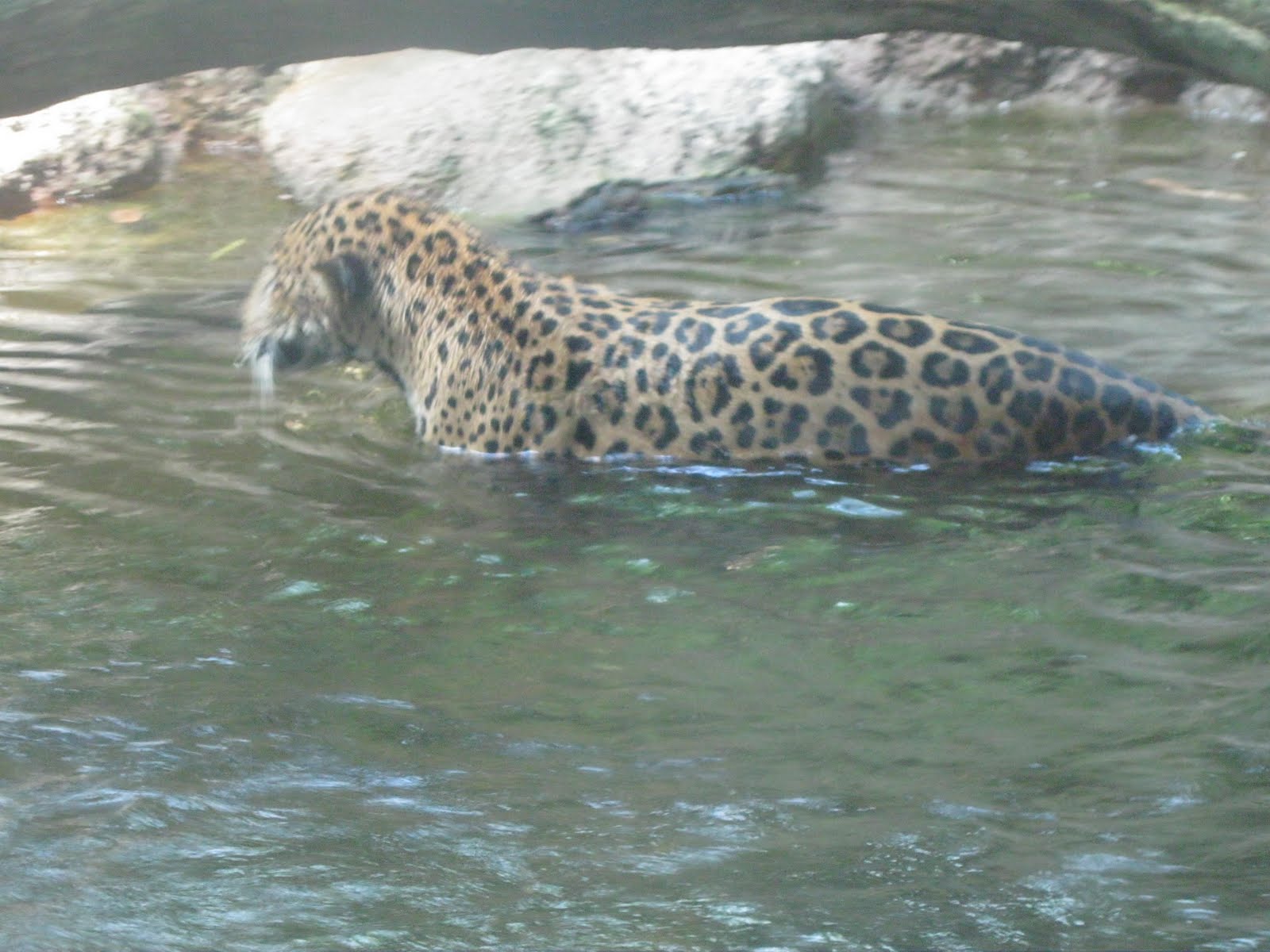
Our last morning, we went on down to the Singapore Zoo and they all aksed for you...They even inquired about 'cha! Sorry, couldn't resist an Audubon Zoo song reference. It's one of the best zoos we've seen. Swimming jaguars, elephants moving logs, feeding giraffes ourselves (never done that at any other zoo!), and orangutans using "tools" like twigs to pull in keeper-designed food challenges like pulling in fruit to himself. And, we're now officially obsessed with Komodo Dragons whose spit has enough bacteria to kill you slowly and painfully, not the way to go, dying from saliva. I'm now dying to go to the Komodo dragon islands in Indonesia.

Ken was happier the moment we hit the bus for Singapore. He'd been feeling beleaguered and demoralized by his role as the stay-at-home dad (or as his New Zealand stay at home dads call themselves - a "man-mum"). We're trying to get a sitter to help him out a couple afternoons as a reprieve but, in the meantime, a trip away seemed to do the trick to bring back his adventurous, fun, more free side. It was a delight (and relief) to see again...