|
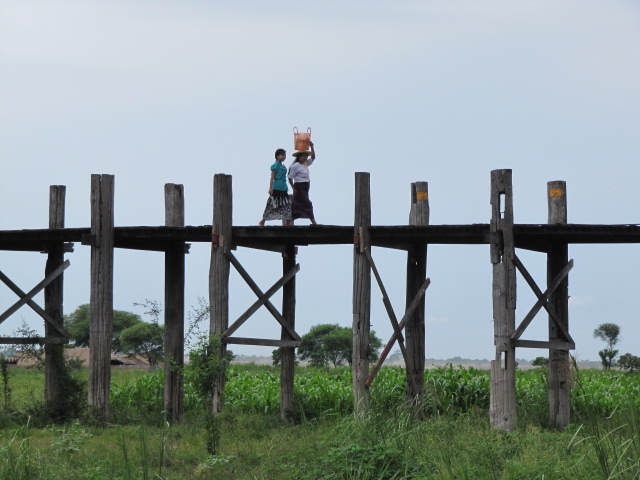
| Grinding peanuts for peanut oil - Big business in Burma! |
 |
| The nuts |
 |
| Where the nuts come from -- underground! |
 |
| Riding the ox grinder |
 |
| Where the peanut oil drips out, after the nuts are ground |
 |
| The wooden grinder, with the peanut remains |
 |
| Feeding the peanut remains to the ox, post-peanut grinding |
 |
| A natural cowgirl |
 |
| Parts of palm trees |
 |
| The palm fruit |
 |
| The palm sap collector |
 |
| Better to pray to have Buddha on your side, Just in case |


 |
| The royal tasting of the palm |
 |
| The palm sap |
 |
| One of the many forms palm takes -- this one, a highly distilled form |
 |
| The distillery |
 |
| The fermenting pot, buried into the ground |
 |
| The distillery chef |
 |
| Pure palm alcohol |
 |
| Ox food - the palm fruit remains |
 |
| The tree trunk used for cosmetic purposes on all Burmese women |
 | ||
| Wet then rub the wood to make the "Thanaka," the cosmetic Burmese women wear. The tree has to be 35 years old, at least, to be worthy of Thanaka-making |
 | |
| Thanaka application - Burmese feel like it adds both beauty and protects their skin from the sun, so they put it on the kids to protect their faces from the sun too. |

 |
| Thanaka-covered |
 |
| Thanaka in the shape of a leaf. Some kids wear Thanaka in the shape of Mickey Mouse. |
 |
| A temple at the top of monkey mountain. The locals and temple-dwellers treat the monkeys there with spiritual reverence, thinking the monkeys are beloved by Buddha and the temple gods there |
 |
| Climbing up the many steps to the top, Ken and a local guy connect, in typically friendly Burmese fashion. The Burmese man wears a "Longyi" which is like a sarong tucked in with a knot up top. |
 |
| Awww, baby! Climbing up to mama |
 |
| Monkeys covering the roof, and all over the steps we climbed. Actually, they scared us when they tried to attack a woman in front of us. Some Burmese sell monkey food to tourists to feed the monkeys. So, the monkeys sometimes get aggressive, assuming tourists have food for them. |
 |
| Every temple, often called stupa, have gold-covered domes, and, really, gold-covered everything. |
 |
| The windy top |
 |
| Ring the bell three times for good luck |
 |
| He is a "nat", or a human who became a saint when he died. If you leave money on him, it's assumed you'll get money too. |
 |
| Top of the temple, after lots of climbing |
 |
| My brave warriors, ready to fight the monkeys with their umbrellas |
 | |||||
| The monkeys had come close to us, looking ready to attack, or maybe just eager for food. | So | the boys fended them off. |
 |
| Another "nat" with a another story that the villagers believe -- they worship her too. The nat was a woman who had two boys who died, and as we were being told the stories of the two boys' death, Abraham ran in shrieking. He was so upset he couldn't speak. |
 |
| Another nat |
 |
| Turns out Abraham was shrieking because he saw a monkey steal Ken's shoe from outside the nat worshiping room. |
 |
| Ken thought the shoe stealing was funny |
 |
| We had no idea how you get a shoe back from a monkey. But, this Burmese saleswoman lured the monkey with a banana and stole Ken's shoe back from the monkey. |
 |
| Abraham was completely distraught over the monkey taking Ken's shoe. |
 |
| Boom took a while to recover, even after we recovered the shoe. |
 |
| The offending monkey, keeping an eye out for another unsuspecting pair of shoes. |
 |
| We stayed at Bagan Hotel River View, in two little cottages with balconies looking out on the river. Since it was monsoon season, we got sweet rooms cheap, with pretty much no one else staying at the hotel. That is, no one until the Burmese military came, which was rare that they come out of the woodwork -- The military higher-ups like to lay low. |
 |
| The Burmese military joined the Thai air force, giving the Thai military a "Best of Burma" tour. |
 |
| The Thai general of honor sat by himself for breakfast, with his wife, that is. And many would come by and bow to him. |
 |
| Snake beans at the market in New Bagan. You see, there's a new and an old Bagan. Both used to be one and the same until the military government forced those living in Old Bagan to move out and resettle miles away in a new place called New Bagan, which had no homes waiting for them. Our guide remembers, as a child, going through the forced dislocation, a calling card of the Burmese military government, and nearly starving without their garden and living in tents for a couple years, suffering through many months of monsoons each year, from inside a leaky tent. |
 |
| Alice's notes written on "Nyaungoo Market" in Bagan. The produce was out of this world - I've never seen ones like this before. |
 |
| Bamboo shoots |
 |
| They call these medicated eggs - some sort of fermenting process of eggs so they don't go rotten. They got the idea from China. That's some sort of lyme and chaff or sawdust, I think. |
 |
| The first, necessary ingredient to make-your-own betelnut wrap. Betelnut is the national addiction in Burma, with mostly men smiling with a row of red teeth, showing their addiction. Even the Buddhist monks chew betelnut. |
 |
| The betelnut is wrapped in a leaf like a burrito with lime paste and tobacco wiped on the leaf. Betelnut-for-girls substitutes something sweet for the tobacco. |
 |
| Jasmine to perfume the women's hair. Unlike China, women in Burma take beautiful, cosmetic care of their bodies, skin, and clothing. |
 |
| The Jasmine petals. |
 |
| How they sew the jasmine onto a long thread. |
 |
| Bags of the other Burmese national addiction - RICE -- at the market |
 |
| The eskimos can identify 300 types of snowflakes, and the Burmese can identify equally many types of rice. It all looks like just plain old rice to us. |
 |
| Yes, deep in the heart of Burma is a Brooklyn t-shirt. I've never seen Brooklyn looking so cutesy-pie. |
 |
| The tobacco the women, especially, love to smoke, is wrapped into a cigar called a "Cheroot." The cheroot is made by old ladies and includes "tha-nat" leaves, dried and flattened, bits of dried soft wood seasoned with tamarind pulp, crushed tobacco leaves, dry corn husks cut to make filters, a skein of silk or cotton thread, a leftover from the family loom |
 |
| Owner of an expansive clothing stall, housed with many women sewing and selling. |
 |
| Our guide with Alice is her matching Burmese women's wear. Shiny and pink, the way Alice likes it. |
 |
| Boom wearing Burmese men's wear |
 |
| Grif too |
 |
| Me too! I had them make me 4 shirts, and a skirt, and they tailored them right on the spot. |
 |
| We also visited the Burma Lacquerware Factory, where it turns out lacquerware (bowls, etc.) all start with a bamboo base, making them light as a feather. |
 |
| Lacquer, from a lacquer tree, which has sap so poisonous that even its vapours can cause a serious rash. |
 |
| Colors ground down from various natural elements. |
 |
| The men are bred to be the real craftsmen, making the design carved into the side of the laquerware. The women do painstaking digging, based on the men's design. |
 |
| The designs get pretty elaborate. |
 |
| Boom sat in awe, practically in prayer, watching the men use speedy, loud machines to whittle away the lacquerware. |
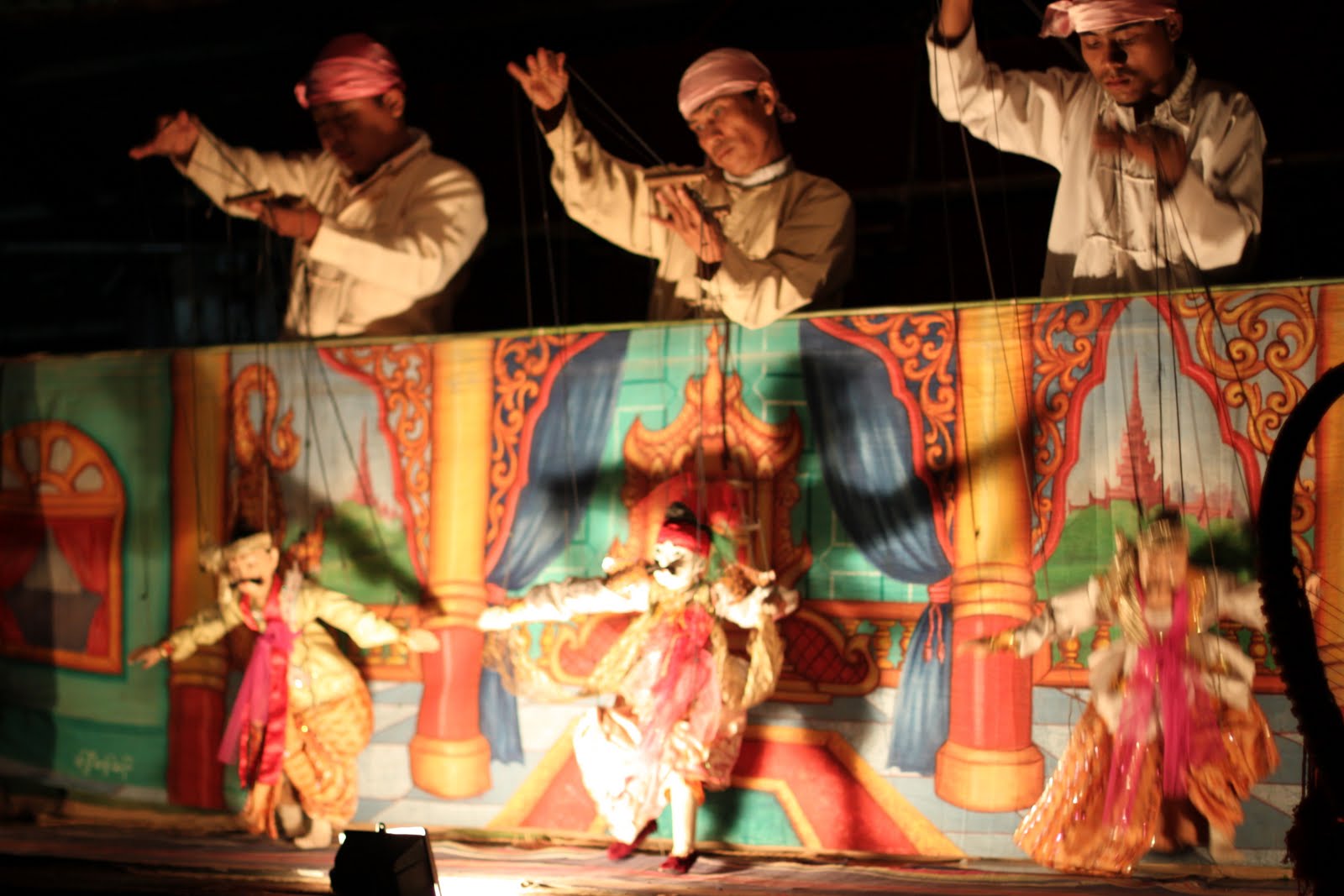 |
| You can't see the Bagan temples at night, but you can see marionettes! |
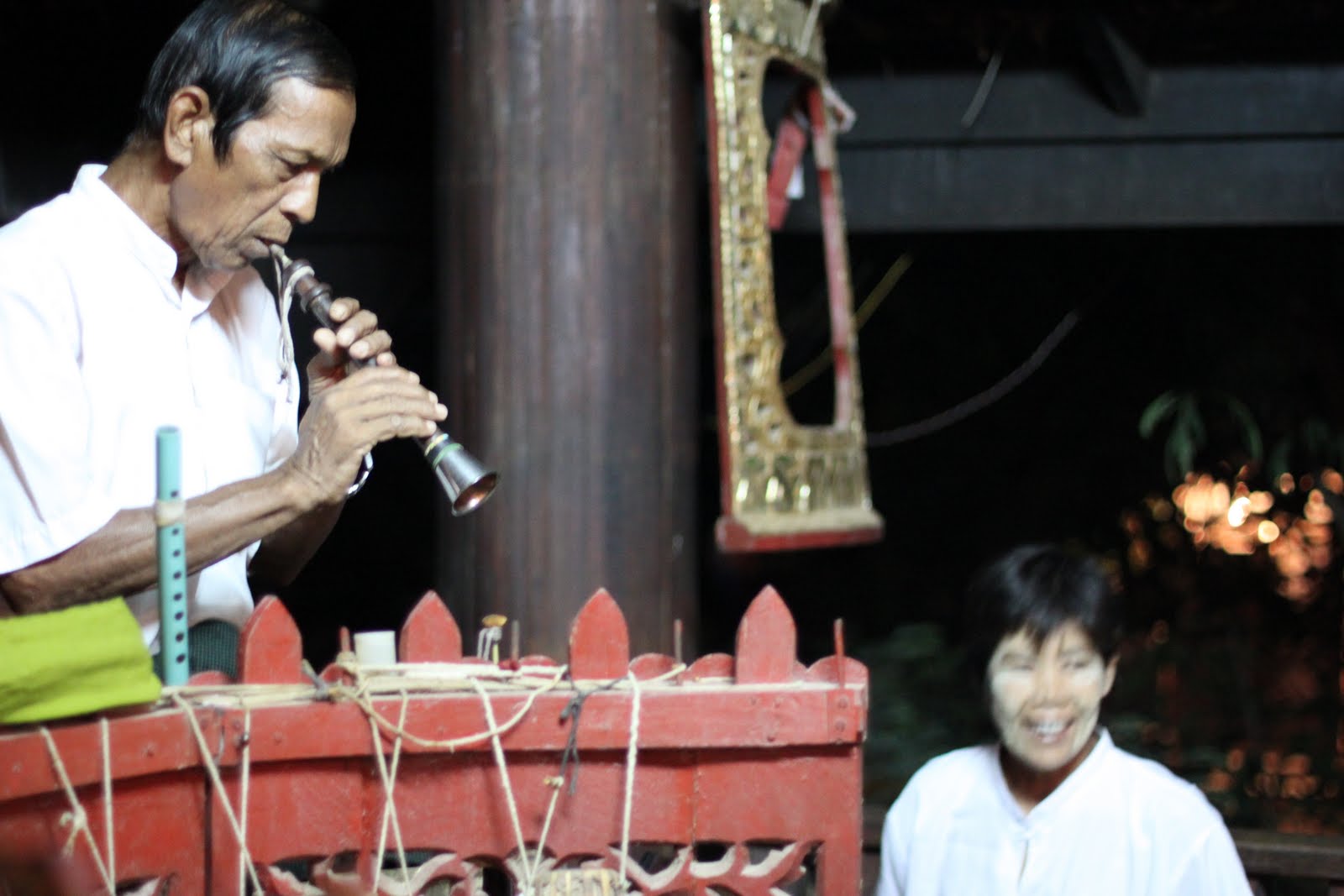 |
| The marionette musicians for the marionette theater dinner. |
 |
| We collected a huge number of marionettes in Southeast Asia and it was good to see them wielded with skill. |