Friday, August 26, 2011

Burmese Military Government: “If you think different, keep it to yourself.” -- Burmese Military Government still very much in charge

Our family being taken by a guide to take a walk by a lake in Yangon. But Inya Lake is not just any lake. The guides are prohibited to take you to see "The Lady's" home, where Aung San Suu Kyi (opposition leader) had been under house arrest before and since her party fairly won elections in 1990, for a total of about 15 years of house arrest. Guides know Americans especially love seeing "The Lady's" home. Since the guides are not allowed to take us to see it, they, instead, offer to take us for a walk by the lake. I asked our guide, "So, is that the Lady's home?" I'd get the slippery answer: "Oh, I'm not sure, it's maybe the one on the left or the right." Then, I looked a bit harder and it was glaringly obvious to both of us that the white house with tall fences, barbed wire, and spotlights on it, surrounded by guards was "The Lady's" home. We were both playing roles in a farce written by the military government.
"The Lady's" house
The Military-Government-controlled newspaper propaganda. Almost laughable. Foreign, democracy-supportive broadcasts, like "Voice of America" (VOA) are seen as a threat by the Burmese military government.
Enlarged photo on wall of Buddhist temple -- Military leaders coming into the Buddhist temple grounds to give yet another gold-laden object at a ceremony.
A photo up on a Buddhist temple wall of the military general leaders praying at the temple. The military want to make sure that they achieve two aims by becoming a part of Buddhist life in the country: (1) The generals seem like friendly, accessible people who are worthy of being revered by the people, the same way the people revere their Buddhist monks as leaders, and (2) The military sees the Buddhist monks as a threat, ever since the monk uprisings, so they have insinuated themselves into Buddhist life in Burma.


June 12, 2011 Visit to Burma (Written and Adapted on November 26, 2011)


Burmese Military Government-Controlled Newspaper Propaganda:

“People's Desire: Wipe out those who inciting unrest and violence.”


I know the military government is no longer officially in charge, but let's get real here -- the military is still completely in charge of Burma. Let's first go back a bit in time --

In 2007, the Burmese monks rose up against the government, with protests in the streets of Yangon. To the world, the monks seemed fed up with feeling oppressed and the lack of free speech from the military government. The initial spark came because an elder monk, who had been critical of the government, was thrown in jail. The military government (now a civilian government, but in name only) reacted brutally, shooting at the monks and more. Even people watching on the sidelines had photos taken of them by the military and were thrown in jail. Those jailed were not allowed to see their families, who also did not know where they were. If they were released from jail and returned home, they were different, mentally ill people, suggesting torture may have happened in jail. And, their families were not able to make a living because the government made sure their families paid a hard price too. Supposedly, at least 2000 political dissidents are still in jail now. They are given non-political charges like stealing. That may change now that the Burmese government is trying to win international public opinion back. The government's recent "flickers of change" (quote from Obama) have managed to convince the ASEAN nation leaders that Burma deserves to be the next ASEAN chair, in its rotating chair position.


Still, the suppression of the monk uprising wasn't that long ago. Brutal suppression of dissidents and minority ethnic groups continues. How does living in this kind of fear, even if it is a bit milder, affect a community and its interactions with each other on the ground? It breeds mistrust and paranoia. One of our guides explained that you cannot even trust your neighbors since they dress as a common man but are really spies for the government. The mistrust extends to the rampant corruption practices by the military government wanting to control everything. You have to pay brokers if you want anything, even to buy a piece of land. But, unlike the U.S., the Burmese brokers are an extension of the military government, and you have to pay a bribe to the government broker to buy the home.

Our guide believed that even friends can’t trust each other, because when it comes to money they will turn on you. They smile, turn on the charm, then they will take your money behind your back, he said. 


Even our most cynical guide believed that there was some, small perceptible change now that the government was no longer officially controlled by the military. He judged the change using the "Tea House Indicator." Tea houses are a haven of late-night male citizen conversations criticizing the government. When the military government was at its worst, tea house conversations had to be whispered, since it was believed that spies were planted at nearby tables, waiting to overhear and report dissident conversations. After the military stepped down recently, the guide felt more comfortable chatting openly with his friends at his local tea house, because there seemed to be less government spying going on.

Our guide also had a very different view of Buddhism in Myanmar, compared to “the people.” He thought the Myanmar people gave millions of dollars to the Buddhist temples to gold-plate them because they prayed to Buddha like he was a god who could grant their wishes to make them more money. But, it seems like Buddha’s writings do not suggest he wanted to be prayed to like he was a god, and he didn’t think praying should be used to get things. Desire for anything, including money, went against Buddha’s teachings.

Interestingly, after the 2007 Buddhist monk uprising and suppression, the generals made sure that the generals were painted into murals of them praying at Buddhist temples and giving inaugural golden temples to "the people." The oppressive government is trying to use Buddhism as a way to control the “people,” along with using the words “democracy” and by using the education system to control them. 


In the military-controlled newspaper, the word "democracy" was used very differently than in most democratic nations. In the military-controlled media, democracy is operationalized as: A democratic people do not do "uprisings." They wait until the constitution is changed. If you wait for the constitution to change, I’m not so sure it will ever change, at least not the way you want it to change.


As far as education goes, the educated are a threat to the government here. How so? The 1988 uprising against the socialist government was led by the university students. This military government took over after the student uprising had overthrown the socialist government. Then, the military government learned from the weaknesses of the socialist government. The military then changed the entire university education system. Before the military government, there were 5 very large universities in Myanmar. When the military got in power, they saw the congregation of large groups of students as a recipe for unrest and dissent. So, they broke up the universities into a few hundred universities scattered nationwide.


What’s wrong with having so many small universities? When there was only 1 medical college in Yangon, pre-military, all the high quality teachers were located in Yangon. Post-military, there are multiple medical colleges all over Myanmar, staffed by many more professors than pre-military, leading to lower quality professors being hired. Now, people are scared to go to the doctor – people have lost respect for medicine, as a result of the military-led changes in the university system.


Such change is all a part of the military’s efforts to squash free speech and unrest. Same is true for the cost of cellphones and the internet system. Cell phones are over $900US, if you factor in cost of sim cards and the phone itself. Only the very wealthy can afford cell phones. It’s said that the military is keeping the phones expensive to avoid human rights issues from leaking out of Myanmar. The internet is hard to get access to and it’s said that most Myanmar people are not allowed on yahoo among other sites. One guide said each email received and sent is checked by the government, even thought that's hard to believe. There is probably selective screening of certain, threatening citizen's emails.


Parents are complicit with the government suppression of free speech too, with one guide’s mother saying to him from a young age:


“If you think different (criticize the government or Buddhism), keep it to yourself. Do not tell anyone.”

Sunday, August 21, 2011

Burma: Non-Governmental Buddhist Free School

Buddhist nuns-in-training. The poverty in Burma is so bad that a large number of children go live in Buddhist schools, living as mini-monks and nuns year-round, spending every night at the dormatory. Their parents cannot afford to house them and, surprisingly, to even school them because "government, public" schools are not free, even though they give outsiders the impression that they are free. There are enough cumulative small charges that are prohibitive for many families to send their children to government schools. But, the Buddhist schools are FREE. Like in Malaysia, religion does the job that government does not do. In Malaysia, the government won't school the refugee children, who are largely from Burma. So, the Christian groups school the refugee kids. In Burma, the Buddhists school the kids in poverty.
Both adult nuns and government teachers (in traditional teacher white shirts with green skirts, who must be moonlighting for extra money) do the teaching in Buddhist Free Schools.
One of the nuns as teachers
One of the youngest nuns-in-training getting clean, filtered water from a tank.
The tank was donated by Burmese Buddhists who escaped to the U.S., donating the clean water tank, perhaps to accumulate Buddhist merits for the next life.
Preschool for mini-nuns and monks. Preschool nap time. No one slept. Just a few feet away were multiple outdoor classrooms with kids chanting loudly.
The monk preschool teacher, glaring at and threatening the preschoolers if they didn't lay down and pretend to sleep.
Older students, with their sun protecting hats laid by their side, along with their signature Burmese bags used to carry their school books.
The students painstakingly copy what the teachers write on the board. Not much critical thinking promoted here, or at the government schools.
Happy nun student.
Chanting their lesson, learning in pairs.
This charming monk student, on the left, reminded me of Zander, my nephew, charming, witty, crinkly smile, and a harmless, disruptive cut-up in class.
The row of boys are standing up, chanting into the ear of the teacher on the left (the teacher is in the white shirt with jasmine-garland-laden hair). The classroom is structured with the teacher going round the room, row-by-row, listening to the chants that were memorized by the row of students, while she listened to students in other rows. It is interminably boring for those waiting long periods of time for the teacher to come, and when they see her coming, they get scared and race to memorize their chant, the closer the teacher gets to their row.
Everyone learns English from a very young age, but it's a very superficial understanding that doesn't translate well to communicating English in the real world. You can see the English above: "It is a doll" translated into Burmese below the English writing. All I know is the Burmese writing looks much more graceful and lyrical than the English version above it.
I was scared of this nun too! Check out how she wields that big cane with deft and aggressive impact. She had the younger, elementary students who were less docile than the older students. This aggressive, intimidating threat seemed to be used as the teacher as a socialization tool to whittle them into more docile, malleable chanting learners, fitting them into the square Burmese school system like she was crafting a square peg.
The teacher's glare, combined with her cane, is focused on one side of the class at a time. Turn-taking in learning as a collective group seems to be the system in Burmese elementary schools. She directs one side to chant while the other side learns the chant, then the other side takes a turn chanting, not unlike going to a Buddhist temple where there is a certain chant where one nun up front leads one half of the room in a standing chant while the other nun leads the other half of the temple in the same whispered chant in a prone, prayer position, then they take turns taking the other half's role.
A fascinating corporal punishment tool unique to Burma, or perhaps to all of Southeast Asia -- Standing in front of a room with your arms overhead, as a form of public humiliation that causes arm exhaustion. Interestingly, when you do corporal punishment in the U.S., you notice more anger on the children's faces. In Asia, especially for the more beaten-down, docile students of Burma, students laugh in these punitive moments, since anger is taboo to express towards adults, particularly adult authority figures. I suspect that the authority figures in Burma socialize the expression of protest and anger out of their child students at an early age, just like the Burmese military government has socialized any "protest" out of their populace for decades now.

This may be my favorite photo of a nun-in-training that I have taken. A look of wonder.

A bad-ass monk-in-training who refused to sit in the classroom but wandered outside in the covered raised hallways, sitting on the railings, chatting with any male friends who would periodically come out and visit him. That is one difference I noticed between the Buddhist "Free" and the Government "Public" (but really "Pay") schools -- The Buddhist Free schools give more "free"dom to the students to come and go in the classrooms and to and from school, whereas the government schools crack down with tighter control over student movement, physical location, and attention.


June 9, 2011
The Buddhists provide an education that the government won’t provide for the most poor students. In other countries, like Malaysia, NGO’s would provide an education that the government will not provide. In Burma, there are not local NGO’s and the international aid organizations like UNICEF and Save the Children do not have the ability to do so here. I am finding that the more oppressive governments in Southeast Asia do not educate the most needy in their countries, leaving other groups to fill in the gap for those in poverty. Often those who fill in the gaps are religious groups.

Outside of Mandalay, we visited a Buddhist free school taught by Buddhist nuns, monks, and volunteer government teachers. Click HERE to see what the entrance, and loud, more free-wheeling Buddhist school feels and sounds like. As the title suggests, it is truly a free school where you don’t need to pay for the small number of items the government schools make you pay for – uniforms, ceremonies, renovations, etc. -- which makes school prohibitive for so many poor children in Burma.

Even with such free schools, many poor parents still cannot afford to have their children be educated. It’s said that over half of Burma lives on $5 US a day. Many of these families feel like they cannot feed their children when times get rough. So, in Mandalay (2nd biggest city in Burma) rural parents send their 8 year old and older children into town to live, indefinitely. These kids are serving tea and food at tea houses all over Mandalay, and at midnight you can find them exhausted, passed out asleep on the tea house tables, after they have cleaned up. Then, they are up again the next morning serving tea. These children do not get to be kids.

The kids who can still live with their families but are too poor to go to government schools can go to Buddhist free schools. We visited one in Mandalay that was busting at the seams with hundreds of students, and we visited another one filled with only 8 students at the ancient, glorious Bagaya monastery. The larger Buddhist Free School was located in the hills outside of Mandalay, in an area called Sagaing Hill populated by over 10,000 students in serious Buddhist study at monasteries in the golden stupa-studded hills. The school had young Buddhist nuns, monks, and civilians.

There was much less structure at this big Buddhist school, compared to the government schools. The government schools lock their entrance gates at 9am, not letting in latecomers. The Buddhist school let kids come and go from class as they please. And, it was a loud school. Supposedly, that is similar to the government schools because both institutions use repetition via incessant chanting of memorized text. Click HERE for a class of younger students incessantly repeating the letters the nun points to on the chalkboard.

The older students would sit around class, chatting with each other and sometimes practicing their memorized chant. The only impetus to studying was if your turn to chant for the teacher came up. They you’d practice in a hurry. Click HERE for some young monks avidly reciting their chants all in their row, looking like they were worried what might happen if they got it wrong. I wondered about the consequences too. Note that their chants were not necessarily of religious text. Often they were of English, reading, or even math.

The youngest among them were going through the motions of taking a nap, supervised by a very bored monk. The early elementary school students were given the toughest nun, even draped in pink with her shaved head. This nun teacher in her 20’s did not mess around. There was discipline in her class, loudly wacked onto the tables of distracted students by a long cane that supposedly was intended as a pointer for the chalkboard. She would use it to wack the table, or really close to the offending children’s bodies, to start the chanting of one subgroup who would yell out their chants then she’d wack the table of another subgroup, always keeping them on their toes over whose turn was next. In the front of the room stood the greatest offending nun girl students who had perhaps been disruptive or not paying attention, and they had to stand with their arms high over their heads, fingers clasped at the top. Even that stance wasn’t strictly enforced, with the girls breaking down in giggles, dropping their arms to their sides often. That’s behavior management in the classroom, Buddhist Nun-style.

I think this Buddhist nun saw it as her job to break the kids in, literally, to the rigid, chanting system of learning in Burma. The government schools also are said to start harshly socializing the youngest children to a strictly obedient way of learning that requires you to memorize then be checked by the teacher, in small groups. Not only is harsh corporal punishment used in the early years, or so I’ve been told, by the teachers, but the harsh punishment may be part of a larger system to squelch “free thinking” or critical opinions being expressed. So, the government, the teachers, and the parents all silence the free speech by “wiping it out.” Maybe the harsh punishment is used for simple disruptive acting out, or is it used for dissent in class? Or for “unrest” in response to the harshly controlled chanting learning style?

Outside of this 10,000 Buddhist student hill was a huge propaganda sign placed by the government. I think it was placed there because these 10,000 Buddhist students were also a part of the 2007 Buddhist monk uprising. In fact, after their protests were squelched by the military, the military made most of them return to their rural villages, so there weren’t so many potential dissidents causing an uprising in the same location, all together. In the end, the Buddhist students only left for a few months, and they return to study again, all 10,000 together. Click HERE for a video of the monks lining up for lunch, the monks' last meal of the day, at the monk dormitory, with the young monks-in-training chanting a prayer before lunch. These meals are precious to the monks and their parents who can't afford to pay for their children's meals at home.

Now the monks, who were formerly protesters, study under the big propaganda sign that the government placed in front of their schools and in town, that said this:

“The people desire: Oppose those who do not support stability.” I’ll have to put a word into the military about my desire that they avoid double negatives in their propaganda. And, this desperate effort by the military to oppose critical questions and disruptive behavior in “the people” trickles down to the management of child behavior in the classroom and home.

Saturday, August 13, 2011

Bagan, Burma Elementary School: Government-Supported

Bagan Elementary School
The 5-room school, in trees and countryside, with a big soccer field
Abraham, carrying a bag of notebooks and pencils to give to the students
He chose Justin Bieber-covered notebooks.
Then, we sang a little Justin Bieber to them,
knowing Justin Bieber was a universal pop language,
even in an isolated, poor school in Burma.
The main priority in elementary school is practicing the elegant Burmese script,
over and over and over again
This repetition is truth both in Burma, and in Burmese refugee schools in Malaysia
A moment of international educational and cultural exchange via Justin Bieber
These boy students agreed to write the Burmese alphabet in Griffin's blank notebook.
The round, curving letters float like balloons across the page.
Writing requires intense concentration and a sense of responsibility in Burma.


Abraham, surrounded by his usual flock of Asian followers.
He must look like the glowing, golden one with bright, lit eyes to them.
The work of art that is Burmese handwriting.
They also learn English in school, from an early age.
Click HERE to see a video of us singing the American alphabet song to the Burmese students.
My impression is Grade 3 in Burma is like US Grade 1.
The workbooks are produced by the military junta government,
with clear goals of indoctrination into government propoganda inside.
This drawing in their school workbook depicts Burmese children from every ethnic group,
drawn as members of Burma's greater happy family.
Reality is, many of these ethnic groups are fighting for independence from the military junta.
The famous Burmese child's school bag, worn by adults and children alike,
in Burmese school colors of white and green.
Burmese kids' lunch boxes, in metal canteens
These lunch canteens hold multiple layers with much rice and vege-based sauces and stewed items inside. If you are poor, you can't afford to give your child meat. So, most of these students, who were largely poor, were vegetarian, but not by choice. Click HERE to see a quick video of the canteen lunch, opened.
Alice is about the same age as these girls. That's hard to believe, given the height difference.
She may be much bigger than them since Asians are typically smaller than Westerners.
But, they may also be smaller since they are less well-nourished.
One child with some sort of skin problems on his scalp, making it necessary to shave his head.
I felt guilty about taking this picture of him, since he seemed to realize why I took it,
making him feel embarrassed.

A silly moment of play, imitating my signature silly move with new kids I meet,
especially new kids who speak a different language than me.
I found I became much more non-verbal in my communication after this year in Asia.

A boy who charmed my camera.
He played soccer with my kids.
Click HERE to watch my kids playing soccer with him and the students on their lunch break,
before most of the students went home for lunch with their mother.


So many variations on green and white, not to mention variations on adorable silliness.
The girls weren't playing soccer but were milling about, curious about us and
watching my kids play soccer with the boys, and hoping to get their photo taken by me too.
Teachers during lunch break, watching my kids play soccer with their students,
and waiting to host us in their teachers lounge for the
ubiquitous Burmese welcome snack, waiting for every visitor to someone's home in Burma.
This may be the most welcoming country we've ever been to.
The Head Teacher, or principal, is on the left. Another teacher on the right.
They and other teachers sat with us to feed us and talk, translated by our guide, Myo.
Another teacher pouring us the green tea that seems so necessary in the hosting ritual.
Griffin joined us in the teachers lounge, post soccer game, when the students went home.
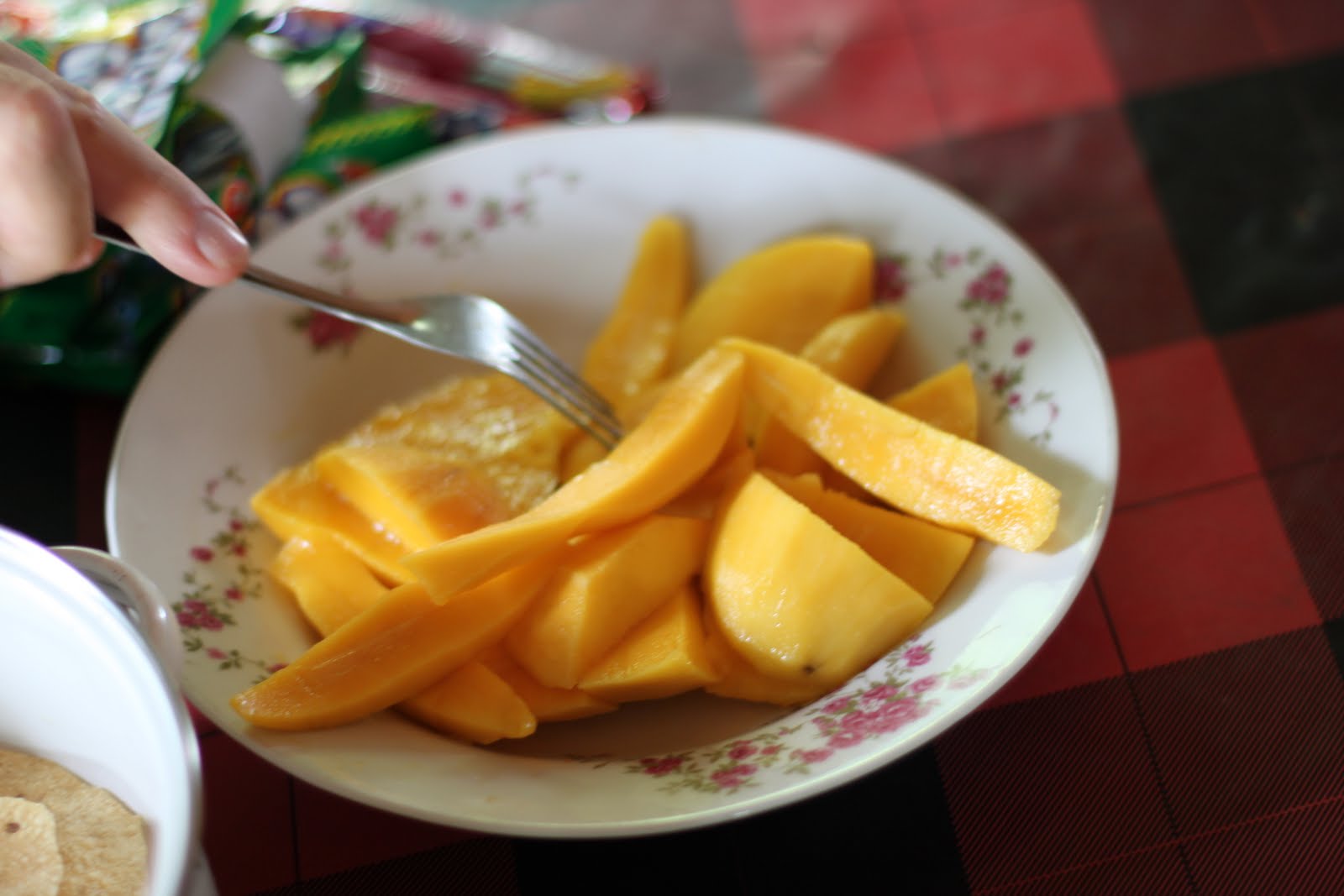
The teachers laughed and took great JOY in the fact he was a ravenous mango eater.
They relished his mango appetite so that they went out and picked a mango off the tree for
him to take home with him as a gift.


Griffin and his mango


A happy boy, sweaty from soccer and his thirst quenched with mango
picked fresh off the tree and tea, that he's grown to love after a year in Asia.

The required picture of a military junta general in the teacher's lounge. Symbolic.
I really liked the Head Teacher. She had a calm, competent, patient, laid-back and open presence.
The teachers sat with us for a long time, even letting me do an impromptu, informal focus group with them about their classroom behavioral issue and management. More details about what the teachers said below. And, click HERE to see part of the focus group with them, with Abraham in my lap. Amazing how having Boom present always opens doors and smooths the way towards more open, warm discussions in Asia.

June 9, 2011

I came to Burma on a Fulbright ASEAN travel grant with the goal of seeing what the Burmese refugee teachers in Malaysia and Thailand were constantly referring to: The way we were taught in Burma. The Burmese way of teaching: Teacher-centered, not child centered. The Burmese refugee teachers in Malaysia also talked about how the Burmese students needed the cane for serious corporal punishment since Burmese children were “stubborn.” Well, the Burmese children may be stubborn in Malaysia but they seem downright docile in this Burmese Government school in the countryside around Bagan in Burma.

The docility at this school was striking. A guide from another part of the country here explained to me that docility and obedience is bred from a young age in Burma, usually socialized via fear. Inducing fear is used as a tool by the parents with the children, by the teachers with the children, and by the government with “the people.” If you think a child is naturally “stubborn,” then a parent, teacher, or government may think it has to make the child fearful of them to control them. “Stubborn” may actually be expressing a dissenting opinion. Or, stubborn might be misbehavior and disruptive behavior in the classroom. I have my doubts about this theory, but I find it interesting. How do they socialize this fear, if they do (which is debatable - a couple people knowledgeable about Burma have begged to differ on this point with me)?

In this area of Bagan, the government provides school through age 17, which is not true in the more oppressed areas like the Chin and Karen states. We visited an elementary school with children aged 5 to 9 outside of Bagan, an area like Angkor Wat, filled with 1000-year-old temples in the middle of middle of Myanmar. This area is not oppressed by the government. The children were so excited to meet us, although shy.

We brought 60 school notebooks (covered in Justin Bieber, to the delight of my 4 and 7-year-old) and pencils, since this was a school in a rural area with somewhat poor children who have to buy many items for themselves that the government will not provide – like notebooks, pencils, uniforms, and transport to and from school. You might not think transport is a make-or-break cost for schoolchildren but it is actually the deciding factor that stops the parents from sending their children away to middle or upper school, which are located further away. Even the cost of having to buy a bicycle for their children to get to middle school will stop the parents from letting their children go to school.

Our guide Myo confirmed that boys are more likely to be educated because boys will be a family providers. Ken pointed out that that may be a bad investment since the women, at least in Bagan, seem to be the hardest working, the actual family providers, running the tourist shops, markets, etc, with the men relaxing in the cafes, spitting their red betelnut on the ground. I left that discussion with the girl feeling very emotionally affected, knowing that just for the cost of $60 US per year she could go to school, but she won’t go to school and will just wait to get married, as young as age 16, although many Rohingya Muslim Burmese marry their girls off at age 13.

The elementary school we visited was a semi-rural, government-funded school with a ratio of about 1 teacher to 15 students, tough to beat – in comparison, my kindergartner will be in a class of 25 with one teacher in New York City. The kids at this particular government school had a better ratio than those at expensive international schools like ISKL for oil expat families. It was not posh, though, and had a traditional education system in place, it seemed. Learning was through repetition. The students had a paperback, short textbook with some children’s stories, a poem, a page or two in English, then the typical government propaganda about a unified, happy nation filled with many ethnic groups who were completely pleased to be unified. There was also a Myanmar flag with a government propaganda page, it seemed.

The students’ uniforms seemed a bit scruffy and dirty, for some. The school did not provide a free lunch or breakfast. Most students went home for lunch. There were certain students who could not go home for lunch because it was too far for them or their parents to travel during lunchtime. So, these students brought their lunch in tins that stack on top of each other and can hang from the handlebar of a bike. The tins were filled with rice and vegetable sauces, without any fish or meat since they were too poor.

The education system in the early years was solely focused on penmanship and vocabulary. There was a bit of arithmetic too. Penmanship is very important in Burma where each letter has beautiful round curves and lines. English is taught from an early age, but with a similar approach they take to learning Burmese – a focus on handwriting, with page after page of writing out each letter, like the letter “A”, repeatedly.

Interestingly, the Burmese Chin school in Kuala Lumpur also had the same notebooks with multiple lines and the refugee teachers largely taught the young children how to write out each letter, over and over again.

The teachers invited us to join them in their teachers’ lounge. While my sons were playing a sweaty game of soccer with the kids at lunch, we spoke with the teachers and had an impromptu focus group. I asked, via Myo our guide and interpreter, if there were any behavior problems at the school. They said, None. After a bit of prodding and reasking, they said sometimes the kids quarrel with each other , like over soccer. But, they don’t have a problem with disruptive behavior in class. I still asked if they used the cane and they said yes, but not often, more of a stick from a tree. I finally sussed out that they use the cane for the kids who get the lowest grades. They caned the kids’ hands, behind, and shins when they caned them, they said. The same was true in Thailand for the Burmese Karen school there – they would have an assembly which celebrated those with high grades then there was a public caning of those with the lowest grades.

I was just told that 2 years ago the government started prohibiting the teachers from “beating” the children with the cane but limited it to hitting the children, only in certain spots like hand, behind, and shins. One guide said that the government started the rule because parents were complaining about the teachers beating the children too much. But, that's questionable too, whether or not there is serious beating that used to be employed in school.

It is hard to get a clear answer to any sensitive questions about life as a Burmese student because the military junta blocks access for all foreigners, and pretty much any sort of outsider, to its schools. The junta won't even let World Vision do charitable, free work in their schools, although it lets Unicef do some minimal education work, but doesn't give Unicef permission for more than one year at a time. The junta is a bit more lax about restricting access to elementary schools, but, overall, it puts up high, symbolic walls around its education system. Some said, the junta does so to better indoctrinate the undereducated masses and to keep critical eyes and critical thinking out. So, school practices and policies are pretty non-transparent. And, that's also why our guides need to get permission from the teachers before we enter so that if the military questions them later, our guides can say they got permission from the teachers first.